How to Make a Small Living Room Look Bigger (Without Knocking Down Walls)
Thoughtful furniture, useful storage and a room that works for you.
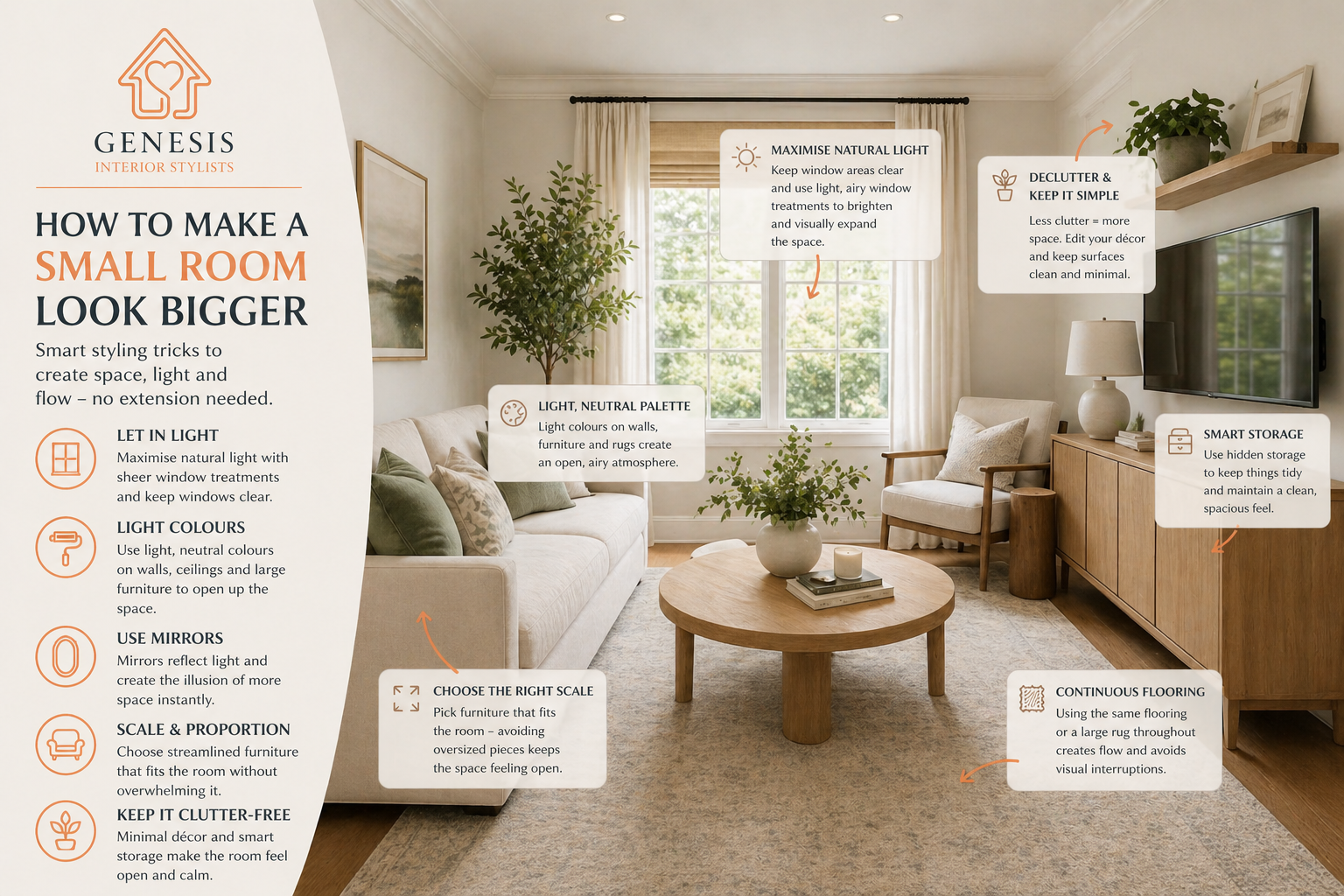
A smaller living room can be comfortable, welcoming and full of character. Start with how you want to use it, then choose a layout and furniture that support those needs. The aim is a room that works well, rather than one that simply looks larger in a photograph.
At Genesis Interior Stylists, our residential interior design service helps homeowners in Blackburn and across Lancashire bring furniture, lighting, storage and finishes into a considered plan.
Measure the usable room before shopping
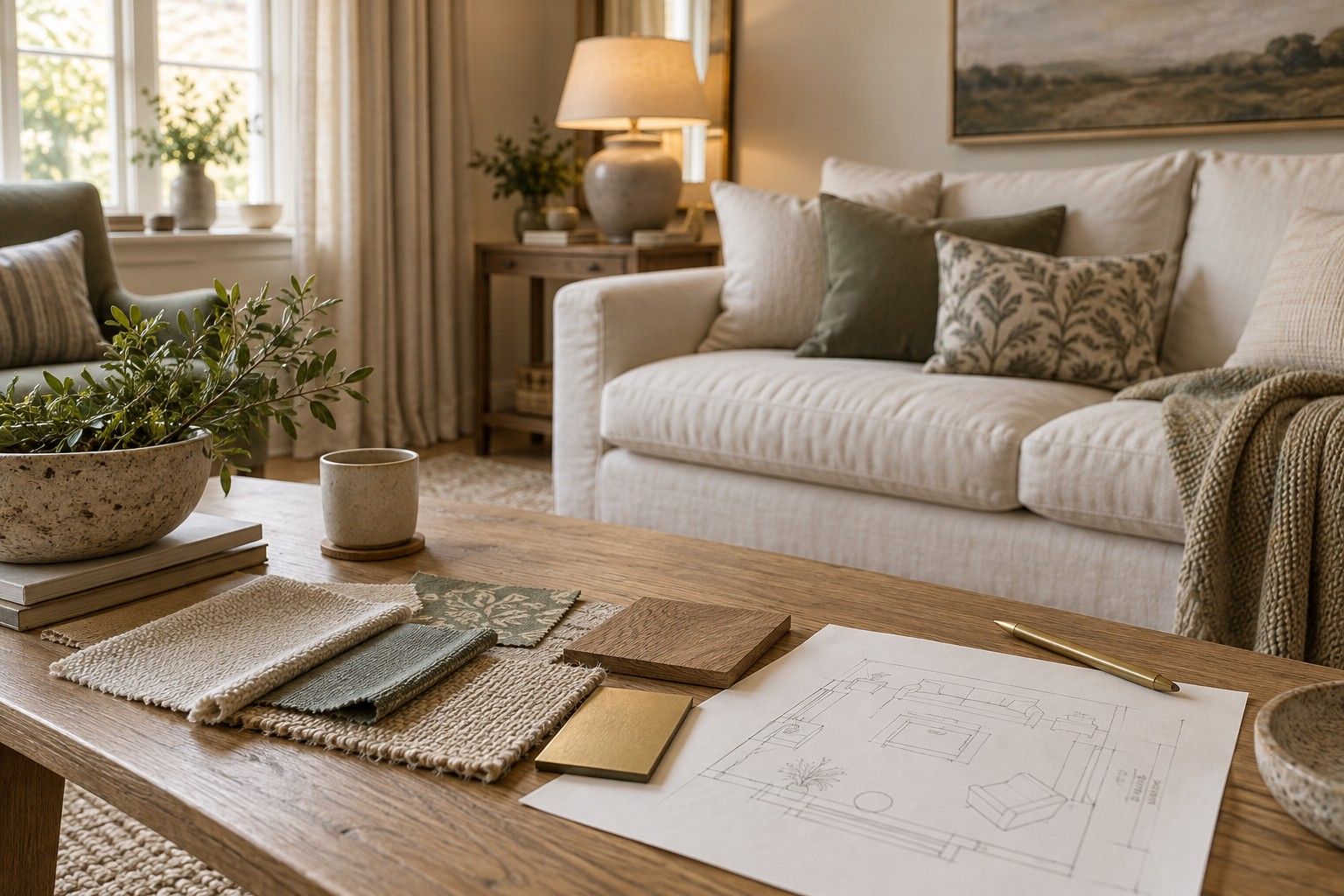
Record walls, windows, door openings, radiators and the position of sockets. Include alcoves and changes in level, and note where you need to walk through the room. The available wall length is only one part of deciding whether a piece fits.
Check the space needed to open a cabinet, recline a seat or use a sofa bed. Measure the delivery route too. A compact-looking product photograph cannot tell you whether furniture will pass through the doorway or leave enough room to move comfortably.
Choose the main seating around your routine
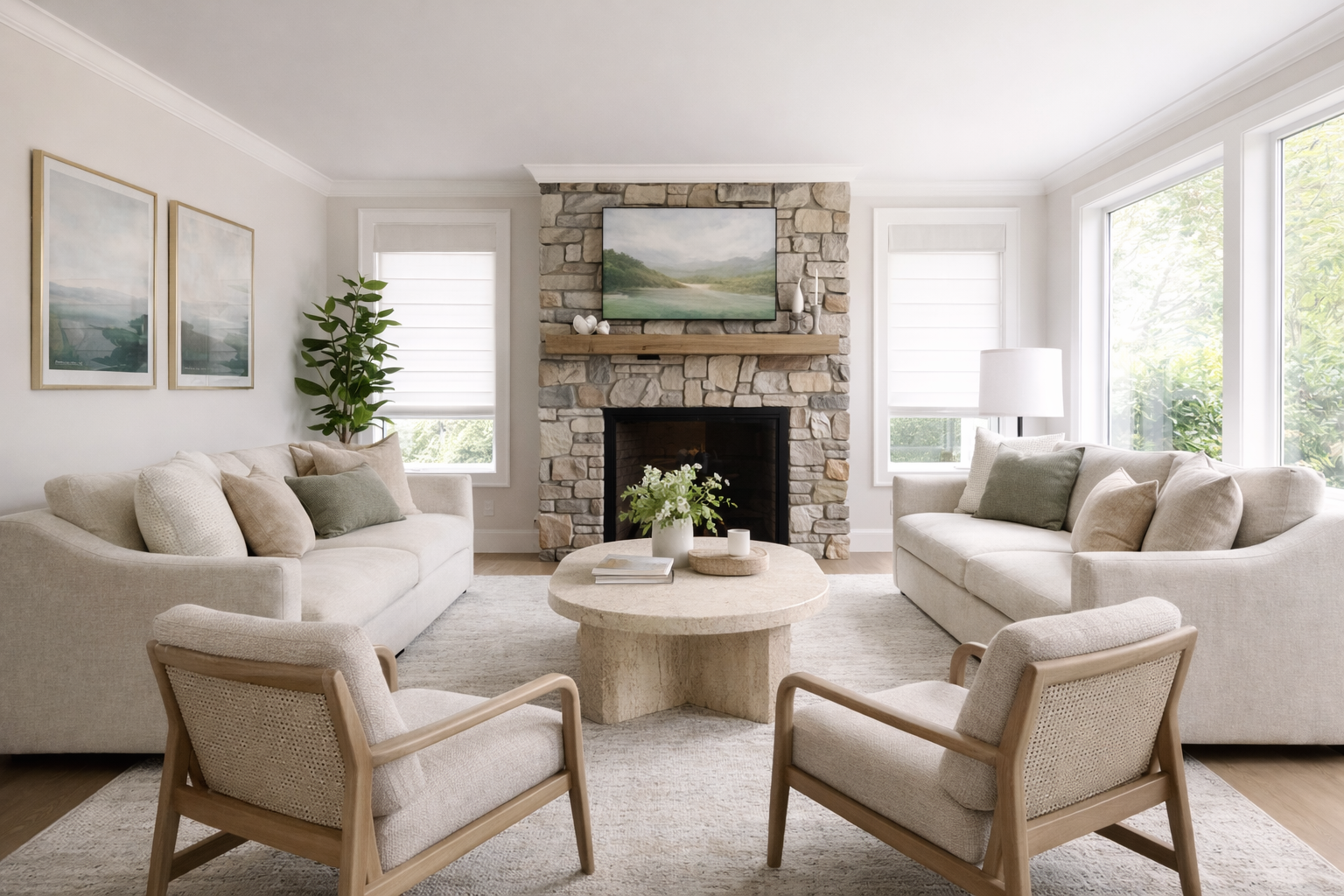
Think about how many people regularly sit together and whether the room is used for conversation, television, reading or several activities. A sofa with slimmer arms may provide useful seating without taking as much overall width, but comfort and dimensions matter more than the label “compact”.
Try the seats where possible, and check depth, height and support. Our sofa buying guide explains the questions to ask before ordering.
Test the layout instead of following a rule
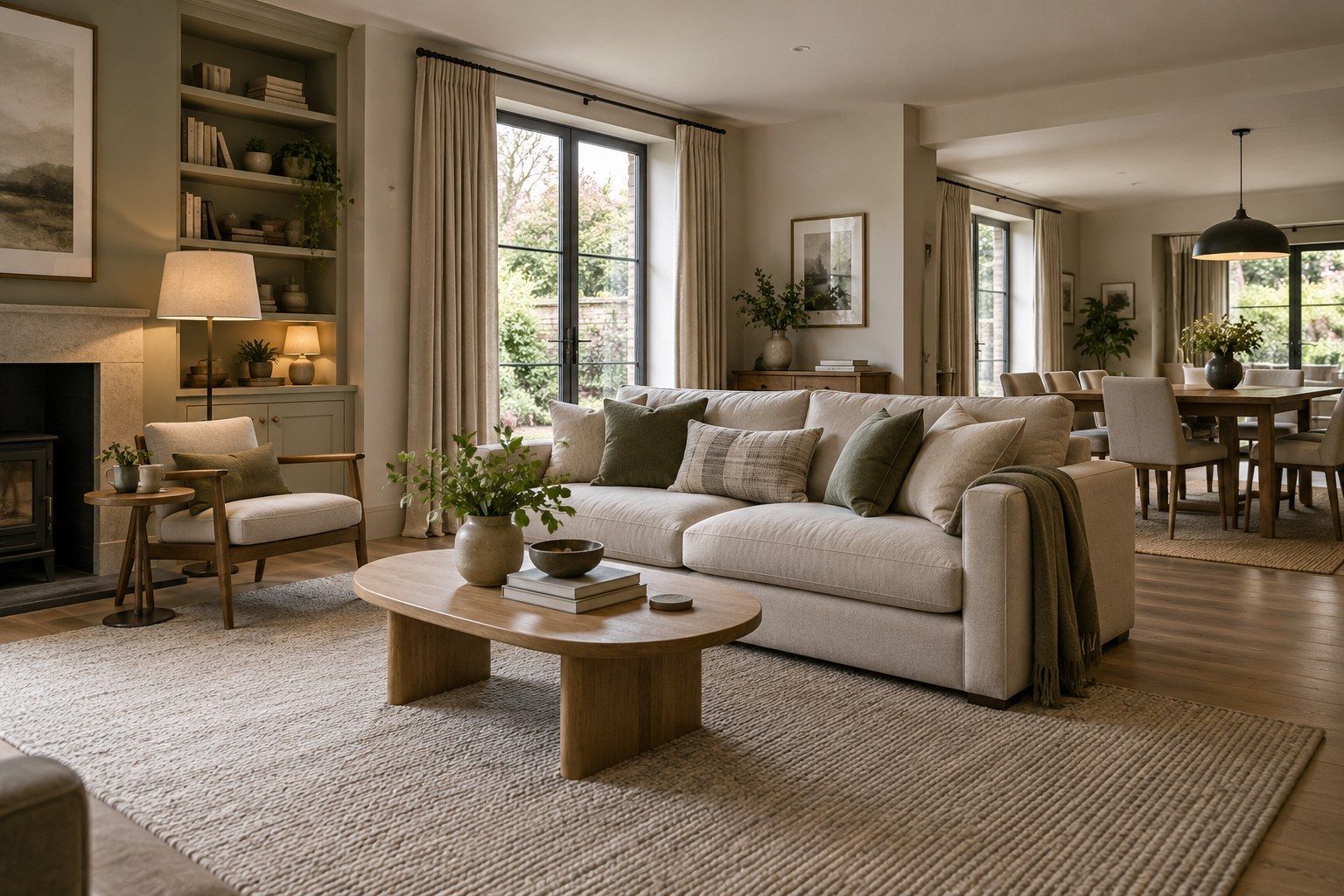
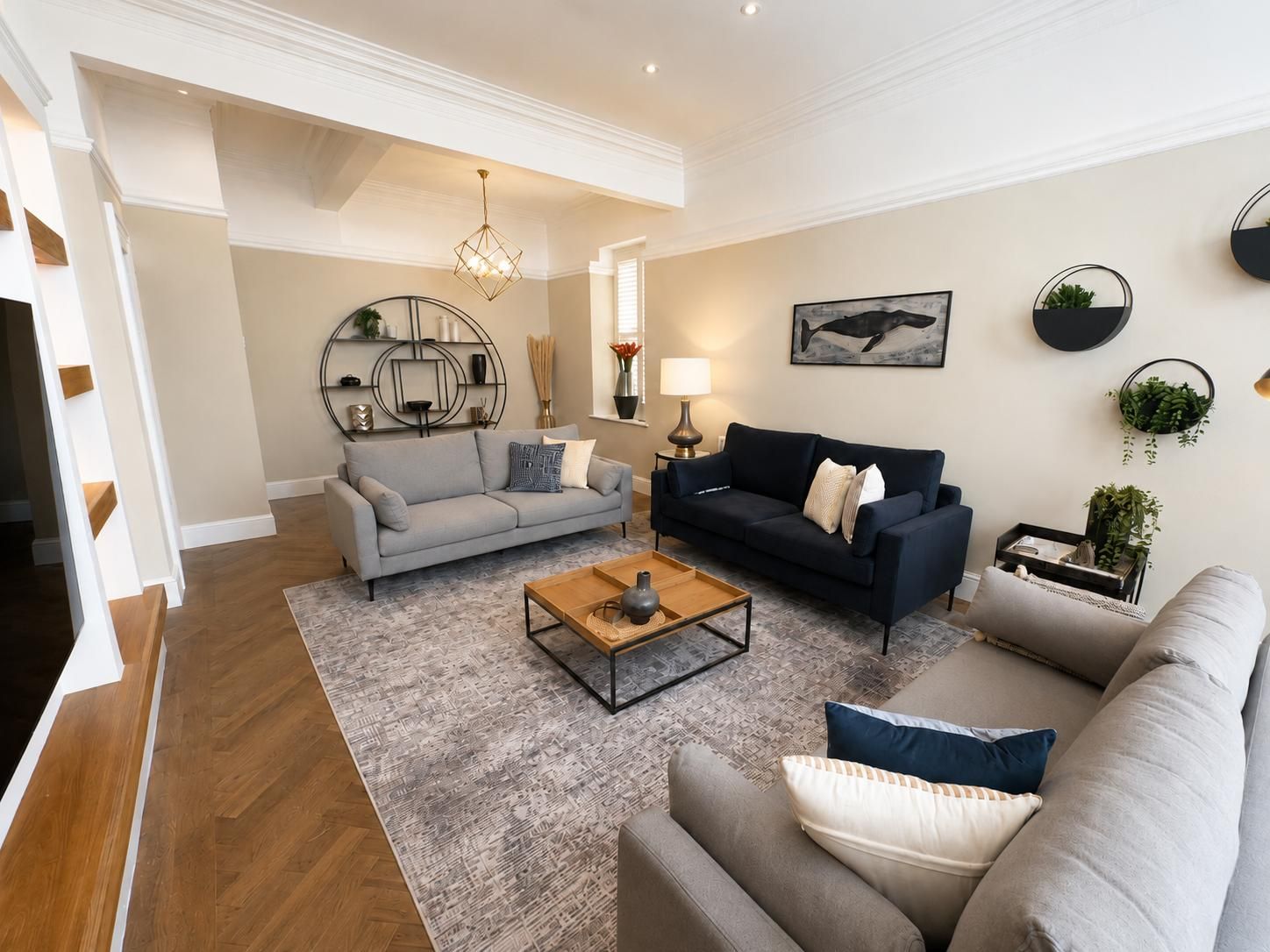
Some rooms work best with a sofa against a wall; others benefit from moving seating into the room. Neither arrangement is automatically right. Sketch alternatives and compare circulation, views and the position of lamps and side tables.
Mark proposed furniture positions with removable tape where suitable for the floor. Walk the routes and check whether you can reach the things you use. A nesting table or smaller side table may suit the room better than a large central coffee table.
Make storage useful and easy to reach
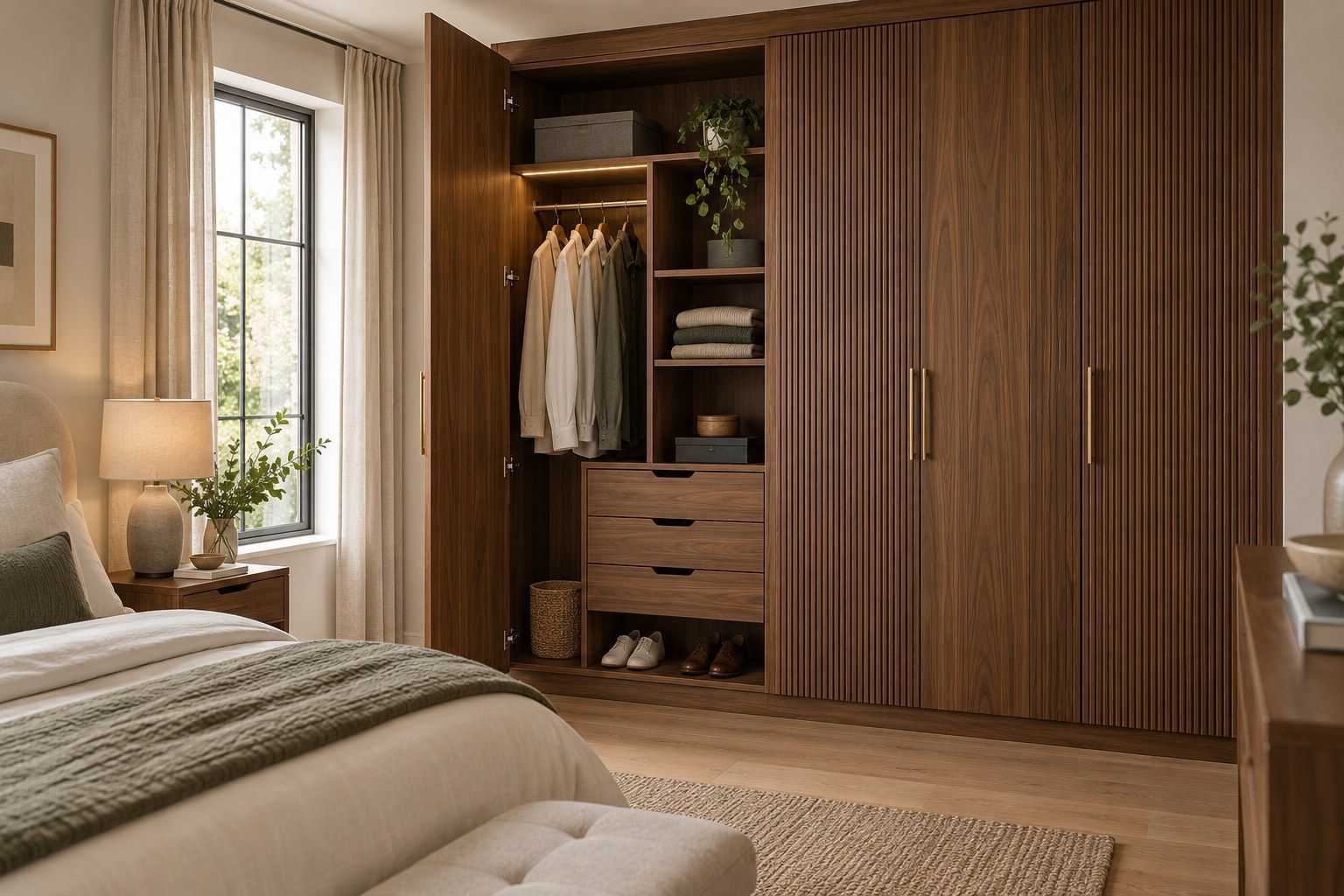
List what the room needs to hold: books, games, chargers, television equipment or occasional bedding. Closed storage can keep everyday items accessible without leaving them on show; open shelves can give favourite objects a place.
Tall or wall-mounted storage needs suitable fixing and access. Check the wall construction and manufacturer guidance with an appropriate installer. A storage ottoman can be useful, but its lid still needs space to open and its position must work around the seating.
Use light and colour to create the mood you want
Pale finishes can help a room feel light, while richer colours can make a smaller space feel cosy and deliberate. Choose the atmosphere you enjoy and test paint or fabric samples in the room’s daylight and evening lighting.
Keep windows usable and consider privacy alongside light. A mirror can reflect a pleasant view, but check what it will actually reflect before choosing its position. Our materials and finishes guide helps bring colour and texture into one palette.
Plan a few well-positioned lights
A reading light beside the chair and softer light elsewhere can support different activities. Consider sockets, safe cable routes and whether a lamp occupies space needed for movement. Electrical alterations require an appropriately qualified professional.
The home lighting guide explains how to combine practical light and atmosphere.
Edit around real life
Keep the belongings that matter and find sensible homes for the everyday items. You do not need an empty room to achieve a calmer arrangement. A rug, artwork or a few meaningful objects can give the space personality when their scale and position relate to the furniture.
If you are improving the room in stages, agree the layout and palette first. Our thoughtful home styling guide covers priorities and phased purchases.
Questions about smaller living rooms
Should every sofa sit away from the wall?
No. Compare layouts against the room’s dimensions and circulation. Moving a sofa forward is useful only if it improves the arrangement.
Does a small room have to be painted white?
No. Test colours in the actual room and choose the mood you want. Lighting, texture and the relationship between finishes also affect how the space feels.
Is multifunctional furniture always better?
Only when you will use its additional function and have the clearance it needs. Check the dimensions when opened, not just when closed.
Talk through your living room plans
Tell Chris and Jenny about your room, or call Chris on 07450 260777. Photographs, measurements and a short list of what is not working are a useful starting point.