Choosing an Interior Designer: What to Look for Before You Commit
A lovely portfolio is a good place to start. It is one part of the decision. You are choosing people who will listen to you, explain the decisions ahead and help you create a home you enjoy living in.
Start with the help you actually need
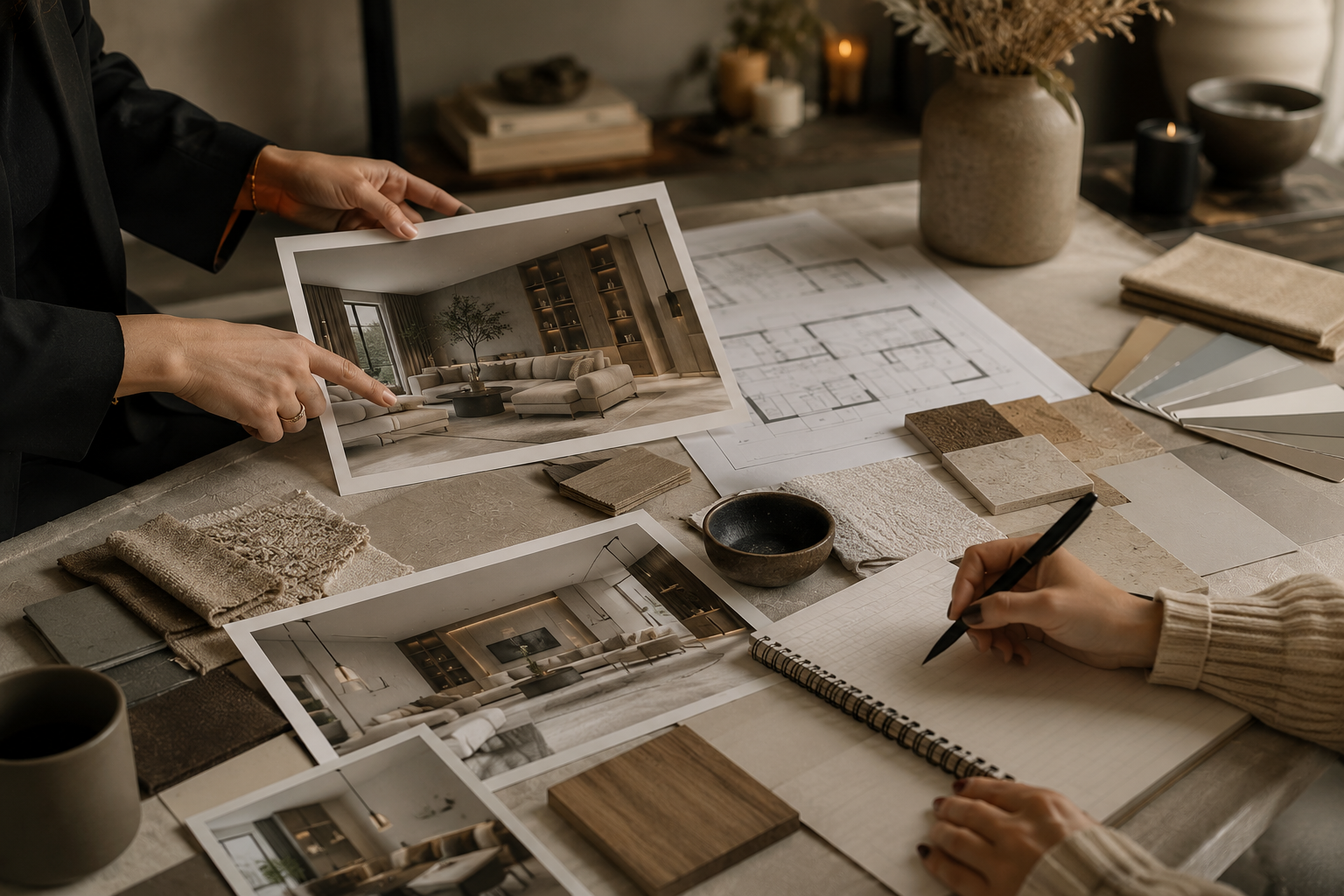
Before making a shortlist, write a few sentences about your home. Which rooms are involved? What is frustrating you? Are you looking for a design direction, help furnishing several rooms, or support with ordering and delivery too? “We want it to feel more like us” is a useful starting point if you can explain what feels wrong at the moment.
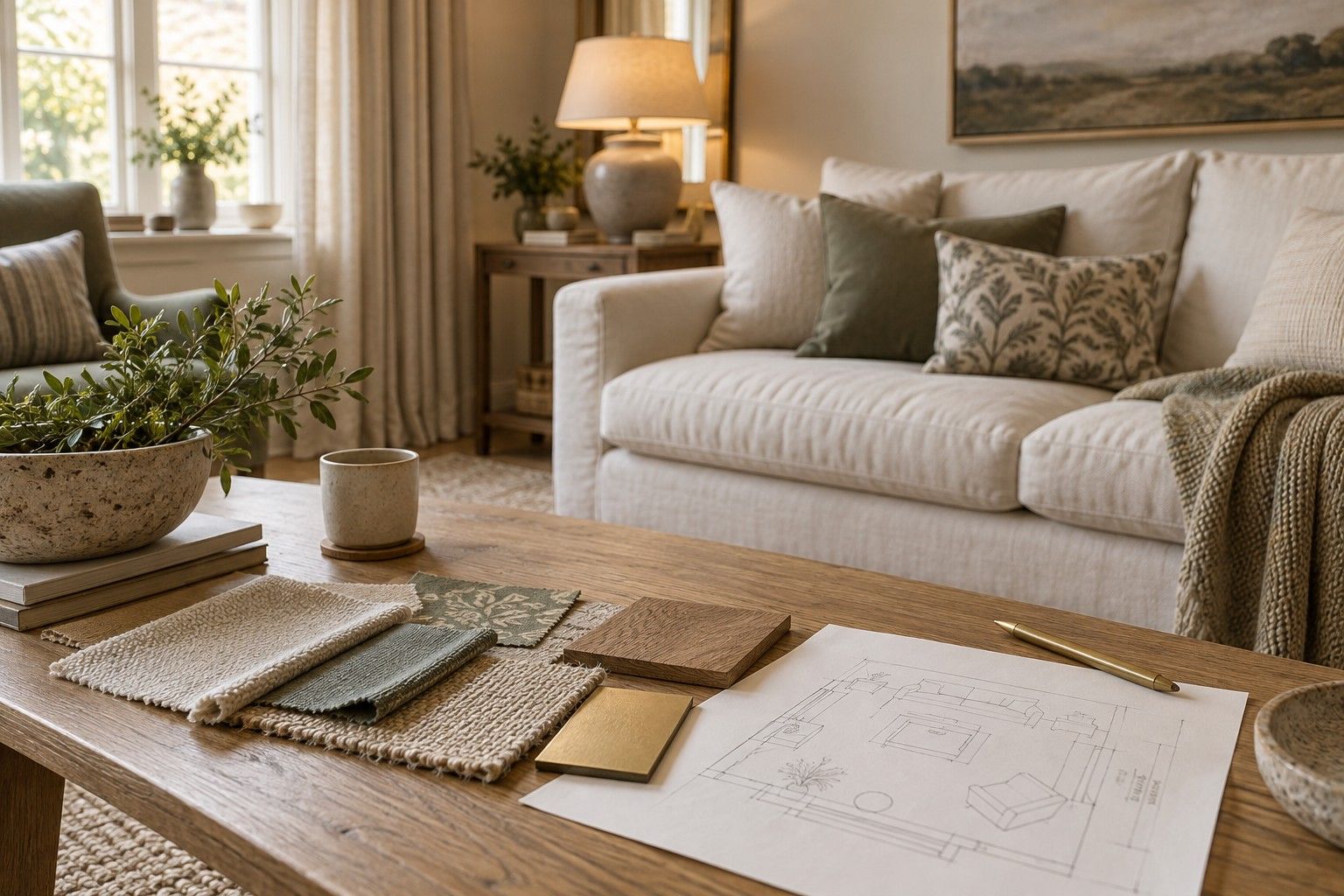
Photos, pieces you want to keep and a few priorities will make the first conversation more specific. Our room-planning brief gives you a place to organise them.
Look beyond the photographs
Ask what the designer did on the projects you’re looking at. Was it a proposed concept, a furnished home, a styling visit or a wider design service? A beautiful photograph doesn’t tell you who made the layout decisions or managed the deliveries.
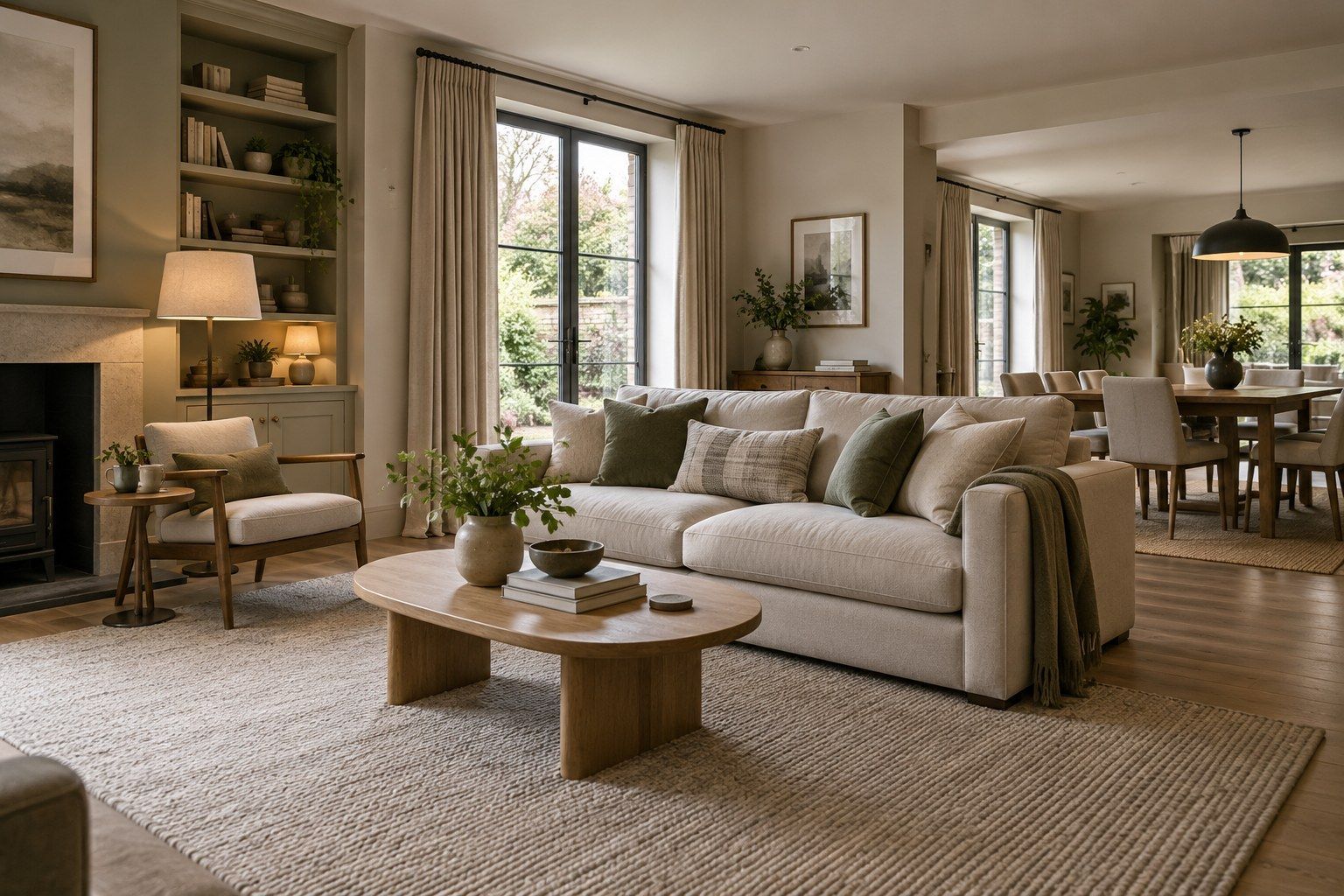
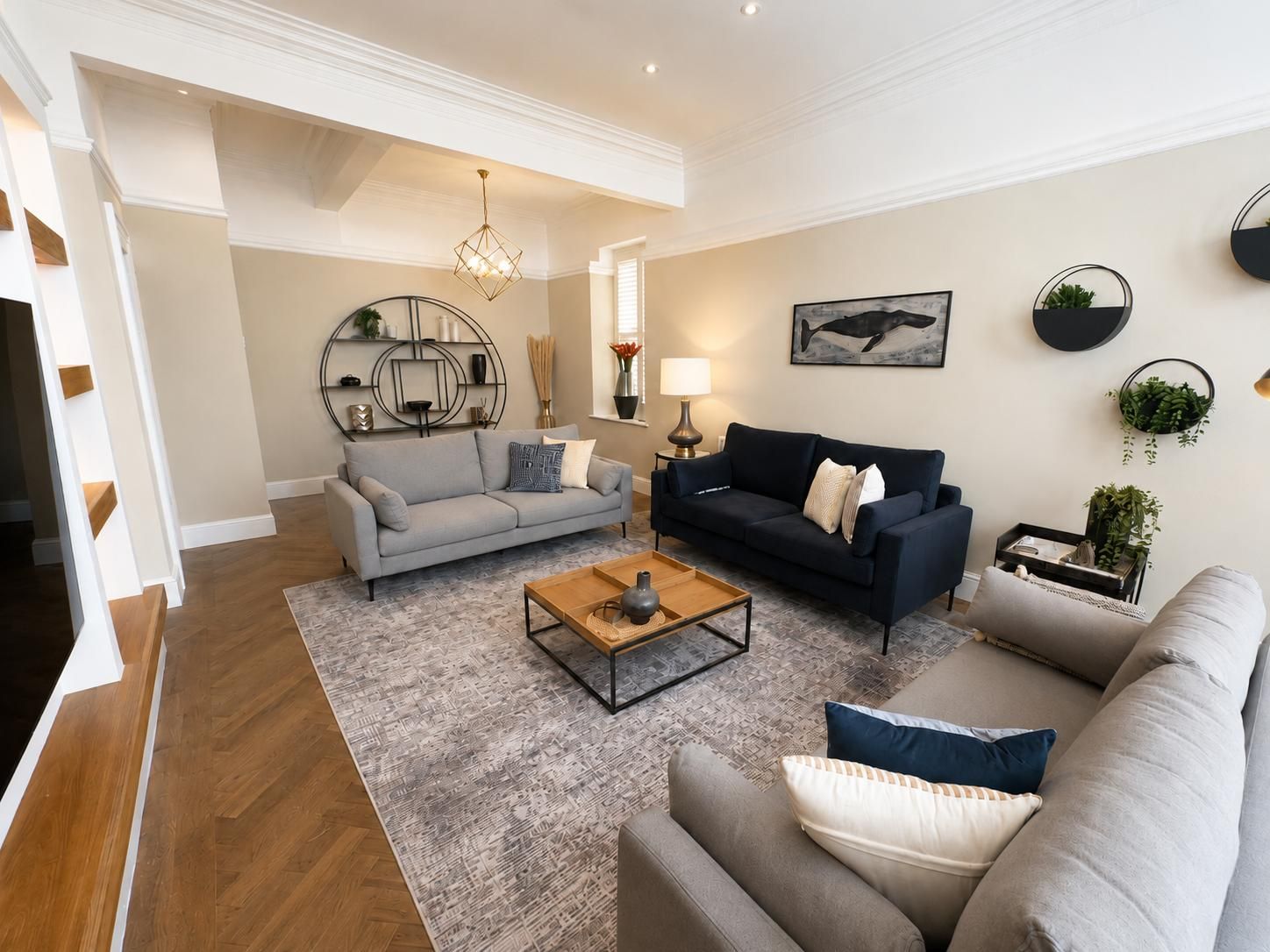
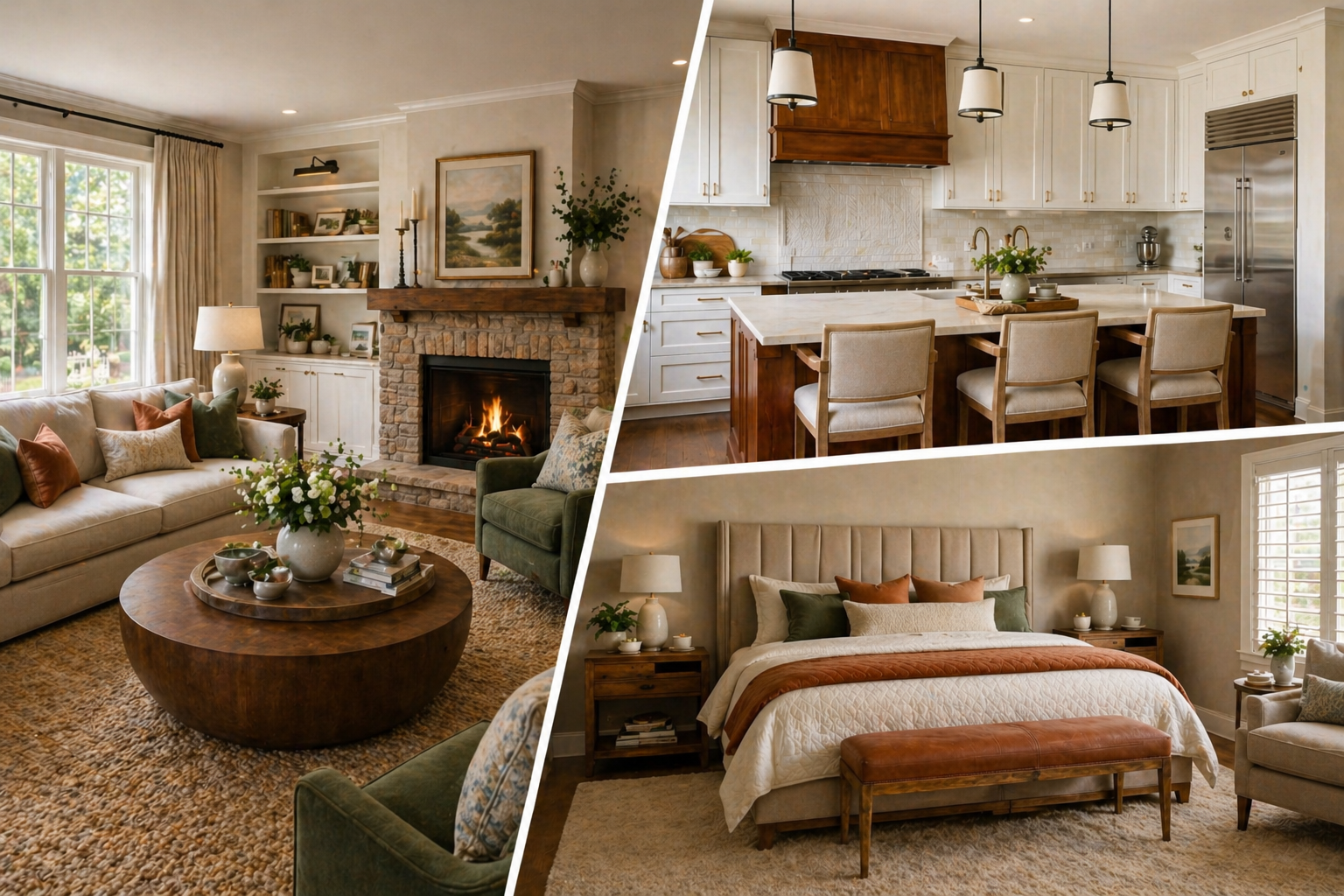
Look for work that solves a problem like yours. If you need help connecting several rooms, ask how the team made the spaces feel related without making them identical. The Rydings family-home interiors is one example of a coordinated home.
Notice how the first conversation feels
Do they ask how you live? Can you comfortably say you love an old chair, dislike a colour or need the room to cope with busy family life? You should be able to ask an ordinary question without feeling you ought to know the answer already.
A useful response may challenge an idea and explain why. Perhaps the sofa you’ve saved would leave an awkward walkway. That tells you something about how the designer thinks and whether the two of you can work through decisions together.
Compare what’s included in each proposal
Two proposals can cover very different amounts of work. Check which rooms, drawings, selections, meetings and rounds of feedback are included. Ask how any extra work is agreed if the brief changes.
Be clear about purchasing too. Who orders and who pays whom? Who handles delivery, assembly or fitting? Ask about procurement charges and purchase terms. Our interior design budget guide explains why it helps to separate the design fee from the furnishing allowance.
Check the practical arrangements
Ask about relevant experience, insurance appropriate to the work and any professional memberships claimed. Check who you’re appointing, how concerns are raised and which professionals are responsible for specialist work. If a proposal is vague, ask for clarification. Pressure to decide quickly or an important question repeatedly left unanswered is a reason to slow down.
A checklist for your shortlist
- Can I explain my priorities comfortably?
- Can they show work relevant to my brief and explain their role?
- Do I know what is included and how extra work is agreed?
- Are fees, purchasing and delivery responsibilities clear?
- Do I know how feedback and problems are handled?
If you’re planning a home in Blackburn, the Ribble Valley or elsewhere in Lancashire, explore our residential interior design service or talk to Chris and Jenny about your home. The initial phone or video conversation is complimentary and without obligation.
Questions you might have
Do I need to know my style before choosing a designer?
No. Explain what you like, what you dislike and how you want the rooms to work. The conversation can help you narrow down the direction.
Should I choose the lowest design fee?
Compare the work included first. One fee may cover layouts and furniture suggestions, while another also covers ordering and delivery coordination.
Can I ask to keep furniture I already own?
Yes. Tell the designer which pieces matter to you, and share dimensions or photos if you can. They can consider the pieces as part of the brief from the start.
Prefer to call? Speak to Chris on 07450 260777.