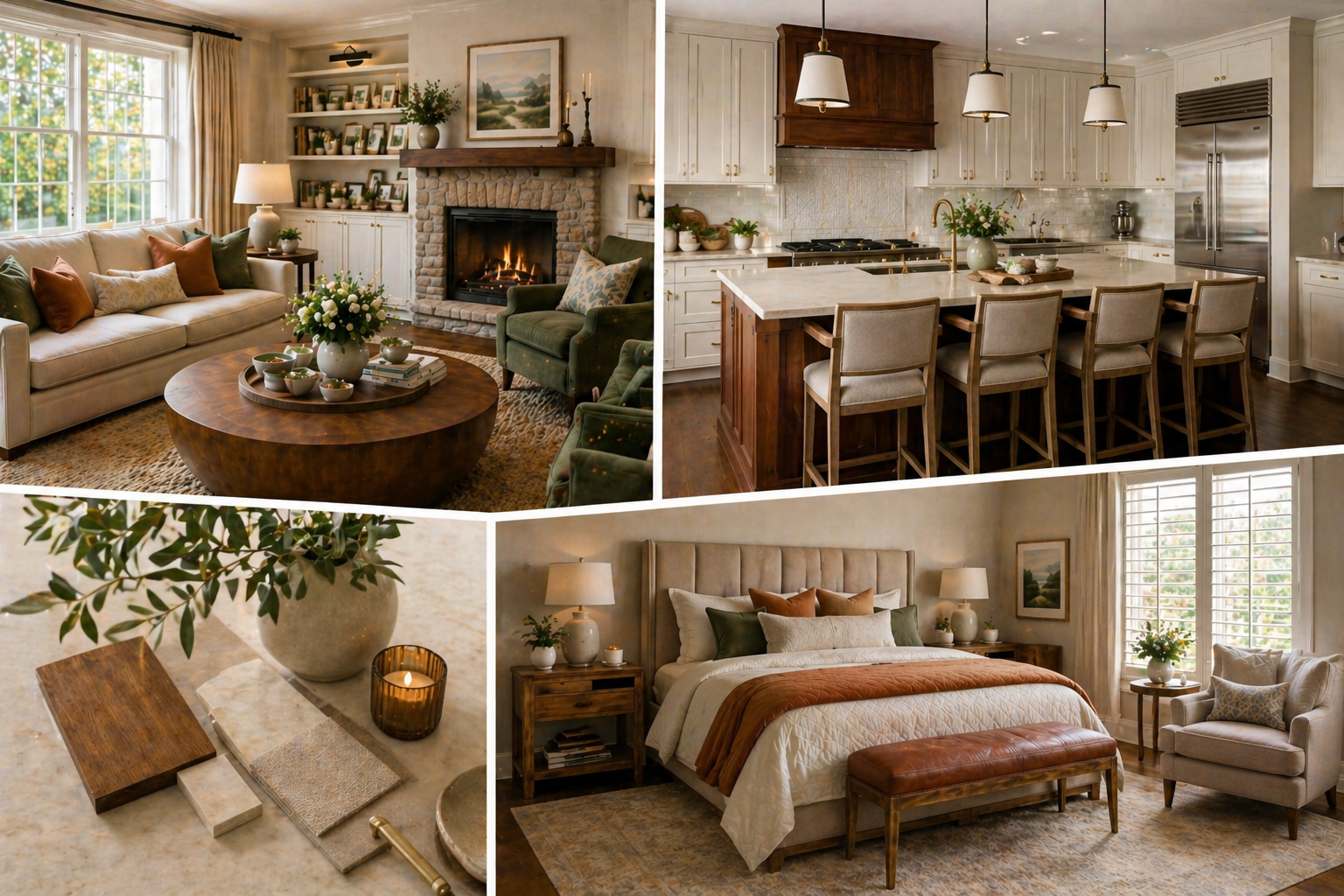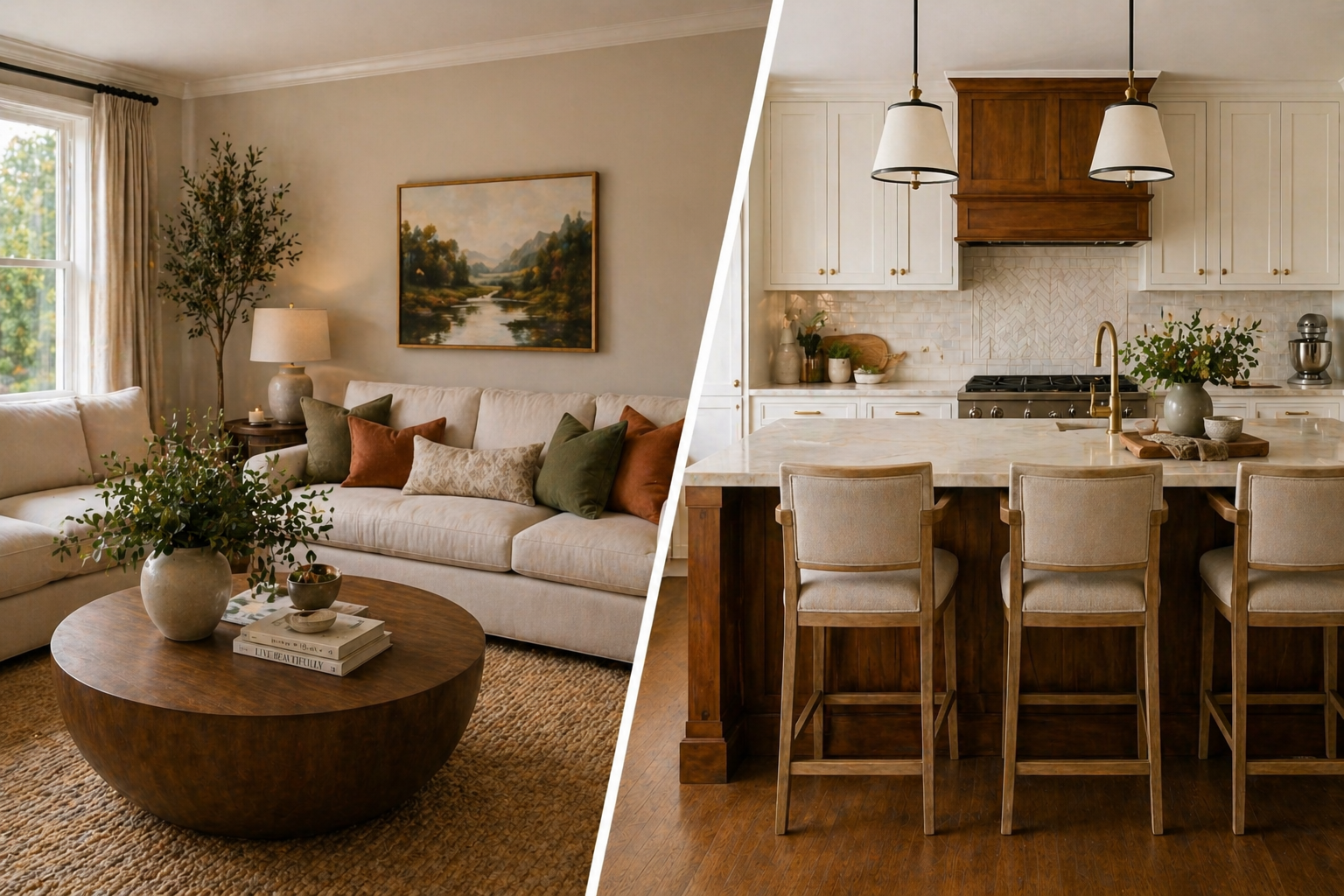
Will Porcelain Tiles Feel Cold Without Underfloor Heating?
Porcelain flooring is beautiful, durable and incredibly practical but one question comes up time and again: will it feel too cold if you don’t have underfloor heating?The short answer is that porcelain will usually feel cooler underfoot than LVT, timber or carpet, particularly during the winter months.
But that does not automatically mean it will make a home feel cold or uncomfortable.
In a modern, well-insulated property, porcelain can still be an excellent flooring choice without underfloor heating. The important thing is understanding why it feels cooler, what is happening beneath the finished floor and how the space will actually be used.
At Genesis Interior Stylists, we always look beyond how a material photographs. Flooring needs to work for everyday life too.
Why Does Porcelain Feel Colder Underfoot?
Porcelain is a dense material.
When you stand on it, particularly in bare feet, it transfers heat away from your feet more quickly than softer materials such as carpet, timber or LVT.
That is why two floor finishes can technically be sitting at a similar room temperature while one feels noticeably colder.
It is less about the tile itself being exceptionally cold and more about how quickly your body loses heat to the surface.
This is also why porcelain can feel wonderfully cool during warmer weather.
During winter, however, that same characteristic becomes much more noticeable.
Cooler Underfoot Doesn’t Necessarily Mean a Cold Home
There is an important distinction here.
A porcelain floor can feel cool to the touch while the room itself remains warm and comfortable.
How noticeable that coolness becomes depends heavily on the construction beneath the flooring.
Modern Concrete Floors Are Very Different From Older Tiled Floors
Many people’s perception of tiled flooring comes from older homes where tiles may have been installed over poorly insulated or completely uninsulated ground-floor slabs.
Those floors can genuinely feel very cold during winter.
A more modern property is usually a very different situation.
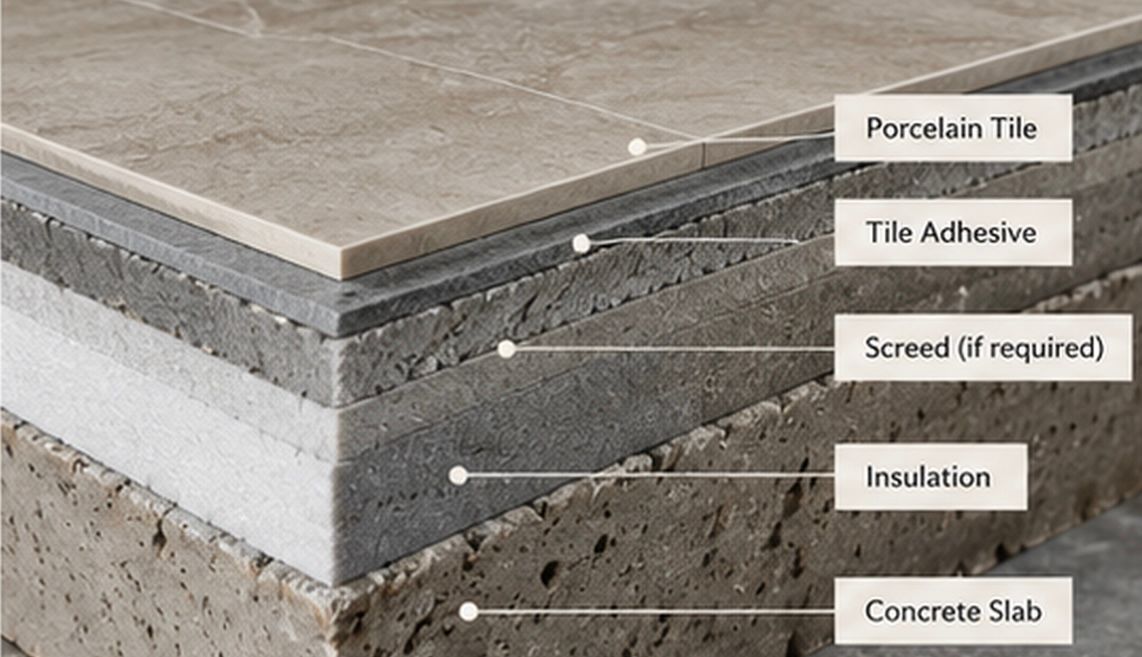
Modern ground-floor constructions generally incorporate insulation as part of the floor build-up. That insulation helps separate the internal floor from the colder ground beneath the property.
As a result, porcelain installed over a properly insulated modern concrete floor should generally feel cool rather than freezing.
However, no two properties should simply be assumed to be identical.
If comfort is an important concern, it is always worth confirming the actual floor specification before making a final flooring decision.
What Does Screed Actually Do?
If a concrete floor needs to be screeded before new flooring is installed, it can be easy to assume that the screed will also make the floor warmer.
Generally, that is not its purpose.
A floor screed is primarily used to:
• Create a smooth and level surface
• Correct inconsistencies within the existing substrate
• Provide a suitable base for the finished flooring
• Help achieve a professional flooring installation
Standard screed should not be treated as a thermal insulation layer.
It can form part of the overall floor construction, but simply adding screed does not transform a cold floor into a warm one.
The insulation beneath the floor is considerably more important when considering thermal comfort.
The Floor Build-Up Matters
Before ruling porcelain in or out, it is helpful to understand what actually sits beneath the finished tile.
A typical modern tiled ground floor might include:
Structural floor → insulation → concrete or screed → suitable tiling system → adhesive → porcelain tile
The exact construction varies from one property to another.
Depending on the substrate and installation requirements, a flooring contractor may also recommend an appropriate decoupling membrane, tile-backer board or specialist flooring system.
These products can be extremely useful for creating a stable tiling surface and managing movement within a floor.
Some systems may also provide a degree of thermal separation, but they should not be confused with proper floor insulation or underfloor heating.
Any additional layer also affects finished floor levels.
This means the complete flooring specification should consider:
• Door clearances
• Transitions between rooms
• Kitchen plinth heights
• Skirting boards
• Thresholds
• Stair junctions
• Adjoining flooring finishes
What About a Home Without Underfloor Heating?
Underfloor heating and porcelain work extremely well together because porcelain conducts heat efficiently.
But porcelain does not require underfloor heating.
Many properties use porcelain flooring successfully alongside conventional central heating.
In a well-insulated home that is heated consistently, the floor temperature gradually becomes more stable.
You are still likely to notice that porcelain feels cooler beneath bare feet than LVT or carpet, particularly first thing in the morning or after the heating has been switched off.
However, there is a significant difference between:
“This floor feels cool underfoot.”
and
“This room feels cold and uncomfortable.”
The two are not necessarily the same thing.
Consistent Heating Can Make a Noticeable Difference
A property that repeatedly becomes very cold and then has to be reheated will naturally produce a colder-feeling hard floor.
A well-insulated home maintained at a relatively stable internal temperature will generally feel much more comfortable.
This is another reason why it can be misleading to judge a flooring material completely in isolation.
The comfort of a room depends on the complete building, including:
• Floor insulation
• Wall and roof insulation
• Glazing
• Draught control
• Heating
• Room orientation
• How the occupants use the property
Good interior specification considers all of these elements together.
Using Rugs With Porcelain Flooring
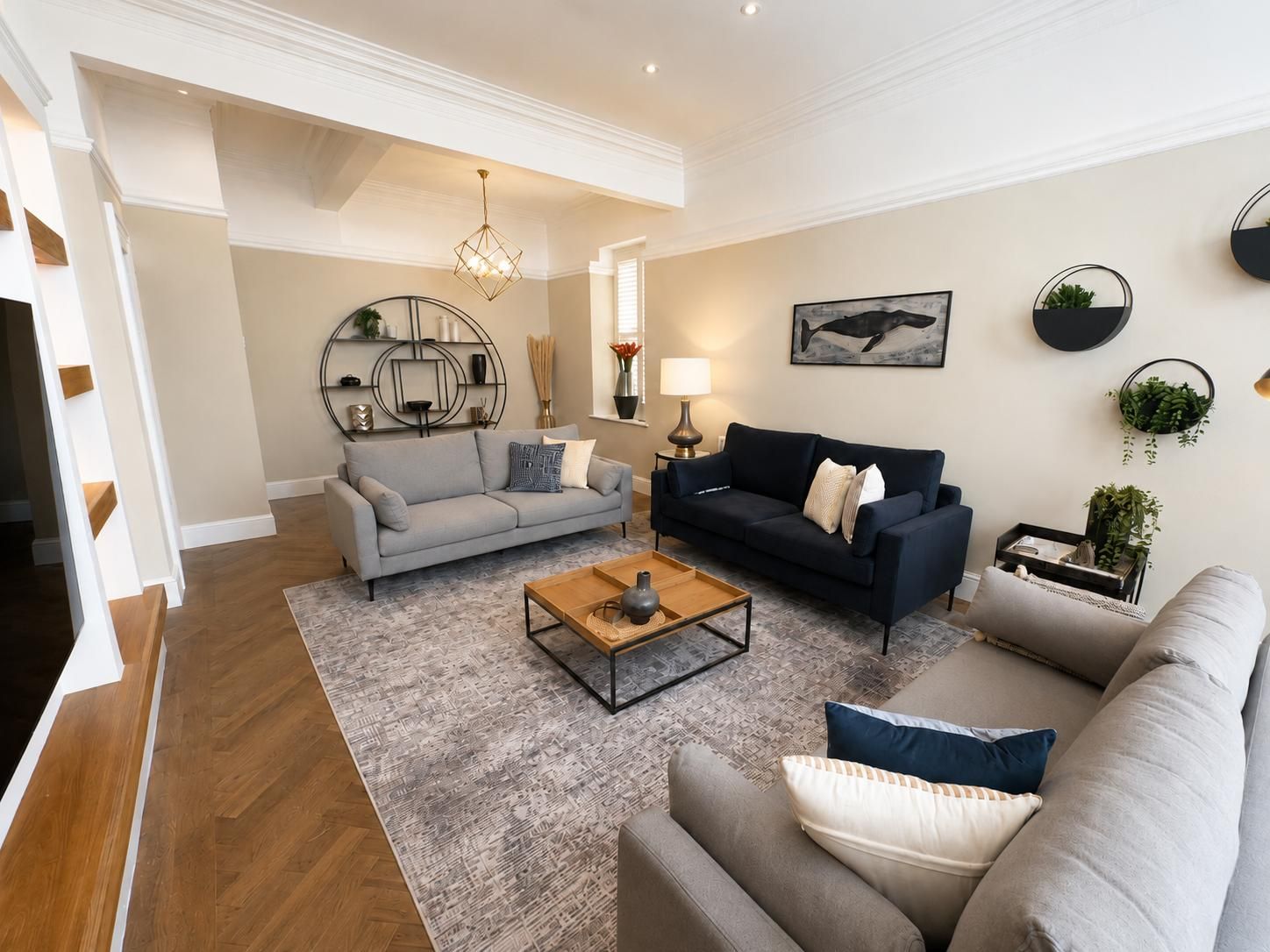
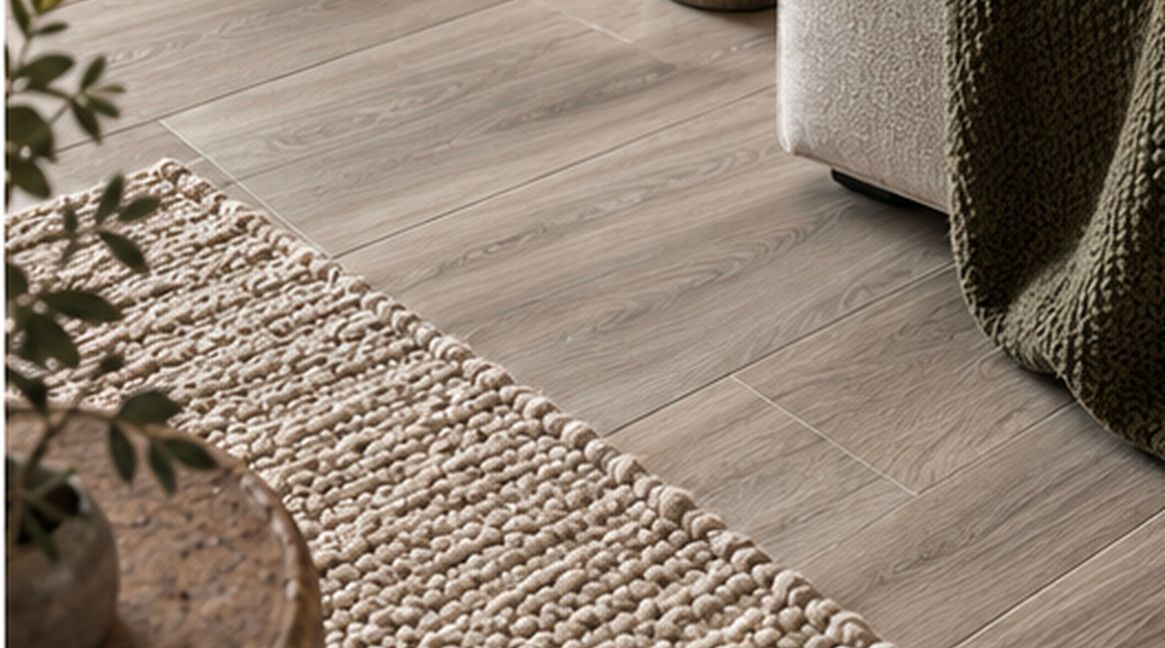
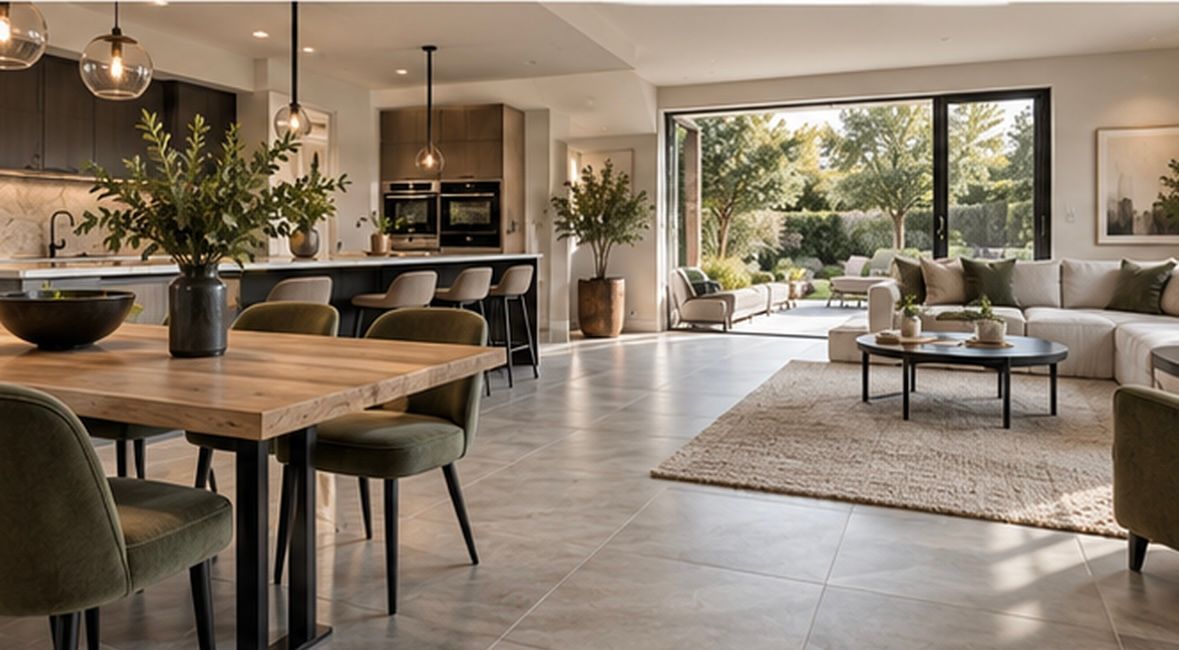
One of our favourite ways to use porcelain within an open-plan home is to combine the practical flooring finish with carefully positioned rugs.
Porcelain can remain exposed in areas where its durability is a major advantage, including:
• Kitchens
• Hallways
• Dining areas
• Utility spaces
• Entrances
• High-traffic circulation routes
Then, within a living room or snug, a generously sized rug can introduce warmth, softness and texture.
This achieves several things at once.
It makes seating areas more comfortable underfoot, softens acoustics within larger open-plan rooms and visually defines individual zones without interrupting the flooring running throughout the space.
The result can feel considerably more inviting while retaining the practicality of porcelain.
Wood-Effect Porcelain: Practical but Visually Warm
Wood-effect porcelain can be particularly effective where the physical durability of tile is required but the design calls for something warmer and softer visually.
Modern porcelain manufacturers can create extremely convincing:
• Oak effects
• Natural timber grain
• Tonal variation
• Textured surfaces
• Realistic plank formats
Although the flooring will still behave like porcelain thermally, its appearance can make an interior feel considerably warmer than a traditional stone or grey tile.
This makes wood-effect porcelain particularly useful for larger open-plan interiors where one floor needs to flow continuously through kitchens, dining areas, hallways and living spaces.
⸻
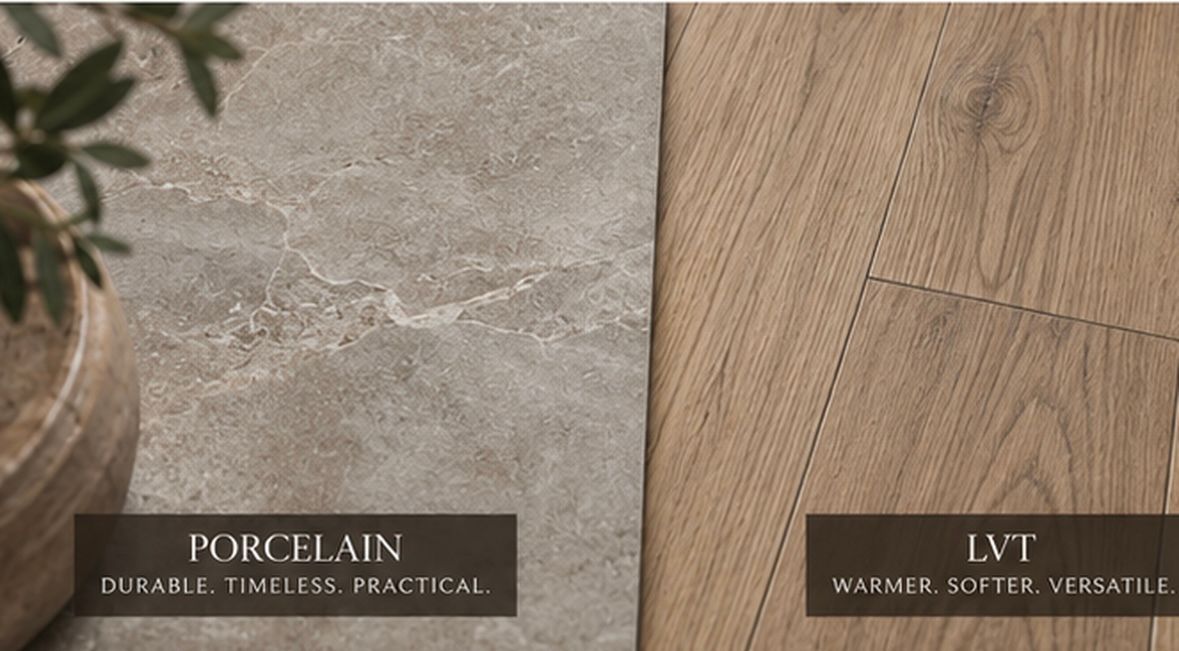
Porcelain vs LVT: Which Feels Warmer?
If warmth underfoot is the number-one priority, LVT has the advantage.
It generally feels warmer and slightly softer beneath the feet and can therefore be an extremely comfortable flooring option in properties without underfloor heating.
However, the comparison is not simply about temperature.
PORCELAIN
Porcelain typically offers:
• Exceptional durability
• Excellent water resistance
• Excellent resistance to everyday wear
• Suitability for busy kitchens and entrance areas
• A very long potential lifespan
• A solid, premium finish
LVT
A high-quality LVT typically offers:
• A warmer feeling underfoot
• A slightly softer surface
• Excellent practicality
• Good water resistance
• A huge variety of timber and stone finishes
• Comfortable everyday family living
There is no universal winner.
The right flooring depends on what is most important within the individual home.
If maximum underfoot comfort matters most, LVT may be the better specification.
If longevity, water resistance and hard-wearing performance are priorities, porcelain can be an excellent choice.
When Would We Be More Cautious About Porcelain?
There are situations where we would investigate the flooring specification more carefully before recommending porcelain without underfloor heating.
These could include:
• Older properties with an uninsulated concrete slab
• Homes where the existing floor construction is unknown
• Particularly cold ground-floor rooms
• Properties that are heated only intermittently
• Bedrooms or spaces regularly used barefoot
• Occupants who are particularly sensitive to cool flooring
In these circumstances, it may be worth exploring the existing floor construction in greater detail or comparing porcelain directly with alternatives such as LVT.
Should You Avoid Porcelain If You Don’t Have Underfloor Heating?
Not necessarily.
Where a home has a modern, properly insulated ground floor, we would not automatically rule out porcelain simply because underfloor heating isn’t available.
It is important to be realistic.
Porcelain will generally feel cooler beneath bare feet than LVT, timber or carpet.
But within a well-insulated and consistently heated home, that usually means a cool-feeling floor rather than an uncomfortably cold home.
If porcelain is the flooring you genuinely prefer — and it suits the way the property will be used — the absence of underfloor heating does not automatically mean it is the wrong choice.
The important part is getting the complete specification right.
Our Approach at Genesis Interior Stylists
We believe a flooring decision should take into account far more than a sample viewed in a showroom.
When specifying flooring, we consider:
• The age and construction of the property
• Existing floor levels
• Insulation
• Heating
• Durability
• Room function
• Maintenance
• Family lifestyle
• Furniture and soft furnishings
• The wider interior design direction
The most successful interiors balance appearance, practicality and comfort.
Because beautiful homes shouldn’t just photograph well.
They should work beautifully in real life too.
Frequently Asked Questions
Do porcelain tiles need underfloor heating?
No. Porcelain flooring can be installed successfully without underfloor heating. Underfloor heating can improve underfoot comfort, but it is not a requirement for porcelain tiles.
Will porcelain feel colder than LVT?
Generally, yes. Porcelain transfers heat away from your feet more quickly, so LVT normally feels warmer and slightly softer underfoot.
Does screed make a tiled floor warmer?
Standard screed is primarily designed to create a smooth and level substrate. It should not be viewed as a replacement for floor insulation.
Is porcelain suitable for an open-plan kitchen and living area?
It can be an excellent choice because porcelain is hard-wearing, water resistant and easy to maintain. Large rugs can then be introduced within seating areas to provide softness and additional comfort.
Is wood-effect porcelain warmer than stone-effect porcelain?
Not necessarily in terms of physical temperature because both are porcelain.
However, natural timber tones and grain can create a considerably warmer visual effect within the overall interior.
THINKING ABOUT NEW FLOORING?
If you’re planning a renovation or redesign and are unsure which flooring would work best within your home, we can consider the flooring alongside the complete interior scheme — including layout, furniture, finishes, lighting and how the home will actually be used.